DEFINITIVE GUIDE TO B2B BUYER PERSONAS
19 min
Updated: August 6, 2026

Executive summary
This guide explores how organizations can utilize demand intelligence and intent data to create more accurate B2B buyer personas, improve account targeting, and optimize B2B growth strategies. By connecting behavioral signals, firmographics, and purchasing trends, organizations are empowered to understand not just who is buying, but why, when, and how to engage them.
- Analyze market signals: Such as first-, second-, and third-party intent data to reveal purchase-readiness and uncover gaps in buyer journey alignment source
- Apply AI-driven demand intelligence: To build nuanced buyer personas that go beyond traditional demographic data, using social listening and behavioral insights sources
- Improve personalization and engage high-priority accounts earlier: In the buying cycle
Explore how to create scalable, intelligence-led buyer personas to ensure pinpoint marketing and sales precision.

B2B buyer personas are a core component of any demand marketing strategy. The increasing emphasis on personalization in demand marketing contributes to raising their importance even further, given their role in custom-tailoring strategies to specific buyers within buying groups.
Furthermore, the direction granted by buyer personas enables teams to focus marketing and sales spending on prospects most likely to convert, contributing to a healthy ROI. However, creating and adjusting buyer personas requires robust data orchestration and accuracy.
According to the Voice of the Marketer 2026, 42% of marketers personalize buying group members by role, but only 25% utilize intent and behavioral signals to do so.
This guide demonstrates how to create a buyer persona based on research and data to empower demand generation programs and drive results.
What is a buyer persona?
Buyer personas act as fictional representations of a company’s ideal buyer, and are usually far more detailed than Ideal Client Profiles (ICPs). Based on research and observable data, buyer personas are designed to describe the type of buyer who will value and most likely purchase your product in as much detail as possible.
B2B buyer personas are essential for your marketing and sales teams to understand how to engage the different buyers within targeted buying groups, which, according to Voice of the Buyer 2026, average between 4 and 10 individuals. This will likely be divided into companies of a certain size, within a particular revenue range, and/or with specific goals, etc. However, personas must be categorized further in order to empower strategies with a more actionable comprehension of the members of the buying groups within target accounts.

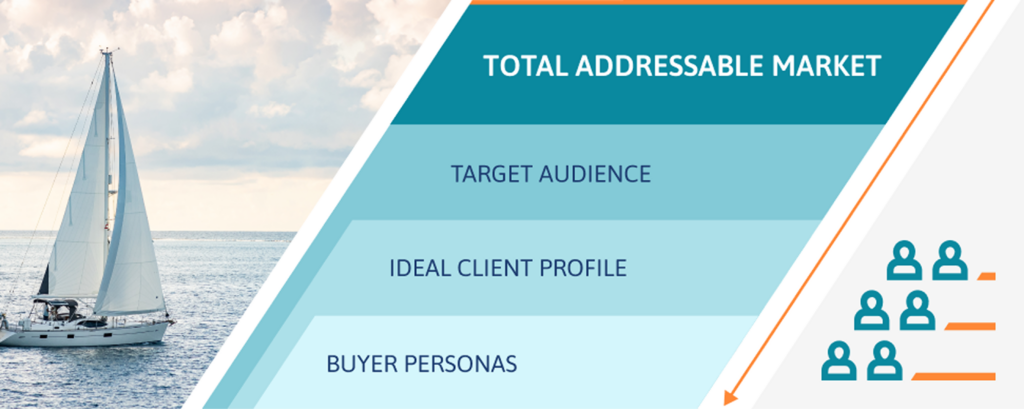
What is the difference between buyer personas, target audience, and ICPs?

To develop effective demand marketing strategies, marketers commonly use three types of buyer attributes: target audiences, ICPs, and buyer personas. Commonly used in combination, they all serve to help guide outreach and marketing efforts, each in slightly different ways.
Type
Definition
Use case example
Total addressable market (TAM)
Target audience
A group of people who share similar traits, making them most likely to benefit from or purchase a product. It is a broad categorization based on characteristics like demographics, location, and behavior
Used to prioritize marketing efforts, such as in ABM campaigns
ICP
The characteristics of a client that is the best fit for your product or service, using firmographic and demographic data such as size, budget, and tech stack. Useful for identifying businesses that are most likely to convert and generate long-term value
SaaS organization looking for a reliable CRM
●●
Buyer persona
An individual decision maker within a target account, who focuses on personal traits like job title, challenges, and goals. Helps sales teams tailor their approach to specific roles within those ideal companies
Marketing manager, IT manager
●●●

“Detailed buyer personas move beyond generic targeting. They decode the specific needs, objections, and decision making priorities of 10+ diverse stakeholders across buying groups, recognizing that each member brings distinct expertise and influence.”

Chief Marketing Officer at INFUSE
What are the elements of a buyer persona?
In order to drive success, B2B buyer persona research should be built based on demand intelligence, market research, expert industry knowledge, and first-party data to ensure accuracy.
Buyer personas typically include the following information to provide teams with as much detail as possible:
Demographic information
Gender, age, location, annual income, and education
Professional information
Industry, job title, and company size
Values and goals
Aspirations, beliefs, and personal/professional objectives
Personal background
Interests and hobbies relevant to their decision making process
Identifying information
Social media use, role as a leader/influencer, and communication preferences
Role in buying group
Role in the buying decision process and buying group
Intent data
Pain points based on content consumed, webinar attendance, and marketing campaign engagement
It is not necessary to establish every detail above in your buyer personas. However, the more granular the understanding of the qualities of each persona, the better equipped teams will be to customize strategies that resonate on an individual level and drive engagement. Indeed, well-defined buyer personas make an effective acquisition tool by facilitating effective targeting.
Types of buyer personas

It is a common mistake for organizations to utilize only one type of buyer persona, usually closely representing their ideal clients, leaving occasional buyers and prospects who did not convert out of the equation.
Having multiple models, on the other hand, helps to expand a company’s target market to engage buyers who, in spite of not being an ideal match, might otherwise benefit from the offered solutions. These different types of buyer personas can help marketers understand different aspects of their audience and interactions, which can then be leveraged accordingly.
Types of buyer personas include:

Primary buyer persona
These personas represent the key decision makers within target accounts, or more accurately, the right buyers within large buying groups. They will likely feature in most of the interactions between an organization and a prospective buyer and be responsible for initiating, supporting, or possibly even making the final purchase decision.

Secondary buyer persona
Buying groups are composed of multiple individuals, many of whom will not have the final say in a purchase, but that nevertheless may influence the primary buyer persona with feedback and insights about the product they are considering.
Given their role in the decision making process, enabling and securing the approval of these influencers is crucial. After all, prospects who have received sufficient nurturing are more likely to become advocates who drive purchases.

Negative buyer persona
A negative buyer persona contains a collection of characteristics that portray prospects who are not suitable for your business.
This may be because it does not make sense to focus on their market, or because your brand strategies are unlikely to get far with these buyers. Negative buyer personas can be beneficial when it comes to effectively focusing marketing initiatives to save time, budget, and resources.
How can buyer personas drive results for your business?
Here are some of the ways buyer personas drive greater marketing results:

1. Gain an in-depth understanding of your buyers
The extensive research needed to define a buyer persona will earn you a vast amount of data on the specificities of your target prospect.
B2B buyer personas should be created to prioritize specific triggers, such as pain points, business goals, and inefficiencies. Knowing the specifics of your potential buyers helps your business truly comprehend their issues and objectives, leading teams to better engage your client base and ultimately fostering interdepartmental alignment.
Once you have created buyer personas, each department, from marketing to sales to client success (CS), will have a clear starting point to work from. Moreover, if you work with outsourced teams, personas can also be useful tools for educating team members and quickly bringing them up to speed. Your dedicated trainers and content producers will be able to use persona-based data to inform their work and make sure they are focusing the efforts of the entire team in the right direction.
This alignment leads your team members to recognize how their contributions relate to the larger organizational mission, and drives your company to achieve the best results.

2. Fine-tune demand strategies
By understanding what your potential buyers want to know, what might pique their interest, and the solutions they seek, you can offer clients and prospects alike engaging, comprehensive information. Hence, it is essential for a company to maintain its personas up-to-date and data-driven, accounting for the ever-changing state of the market, and delivering on client expectations.
B2B buyers increasingly rely on content for decision making, consuming an average of 9-11 assets during their purchase journey (Voice of the Buyer 2026), which demonstrates the importance of content marketing. A solid, data-backed buyer persona offers brilliant guidelines for your content strategies.
Buyer personas make it easier to regularly adapt and customize messages, content, and preferred channels to avoid out-of-date, irrelevant, or generic information. This will result in increased value and performance from strategies and budgets by reducing wasted spending.

3. Increase conversions with prospect nurturing
Guiding your prospects throughout the buying process with prospect nurturing helps to both educate them on topics and products of interest, as well as establish your organization’s value and earn their trust. Giving your prospects a special, individualistic experience empowers their decision making and assists the buying group as a whole in reaching consensus without impeding buyers’ preference for self-discovery.
According to Voice of the Buyer 2026, 24% of buyers rely on information from technology vendors and/or ecosystem partners when making purchase decisions.
How to create a buyer persona: 4-step playbook

This section outlines the fundamentals of creating actionable, data-driven buyer personas, regardless of your organization or industry, to guide your demand generation efforts.

Research
It is essential to back strategies with data to ensure their efficiency. When creating buyer personas, there are two major sources from which to extract data:
Market research
When researching your market, it is important to analyze your buyers’ preferred communication channels, as well as firmographic data and the average yearly revenue of your target accounts, among other relevant factors for your industry.
Social listening also offers relevant insights into problems, criticisms, and issues that interest your audience. By monitoring social media platforms for relevant keywords and brand mentions, as well as the channels of your competitors, you can gather data essential to further detail your buyer personas.
Furthermore, surveys are powerful tools to acquire relevant data. Develop online surveys and distribute them to your clients and prospects to gather information about their pain points, objectives, and preferences.
To summarize:
- Take note of relevant demographic and firmographic data
- Observe your target’s preferred channels
- Investigate your audience’s topics of interest and frequent pain points
- Use tools such as social listening and surveys
Demand intelligence
Demand intelligence combines intent data, firmographics, technographics, and historical buying patterns to understand who, why, and how prospects buy.
Intent data offers valuable behavioral insights that signal a prospect’s interest in specific solutions. By analyzing aggregated intent signals, such as searches for key terms, content downloads, and website interactions, marketers can identify what topics or products are resonating with accounts.
First-party intent data, in particular, helps map early- and mid-funnel engagement, making it possible to segment audiences by interest, buying stage, and likelihood to convert. This data-driven approach forms the foundation for accurate, actionable buyer personas that power more personalized, relevant demand strategies.
Existing clients and their insights on your services are highly relevant sources of information to build your buyer personas. Focus groups, interviews, forms, surveys, and one-on-one conversations, among others, all offer a deep understanding of your target market.
Other than the information offered directly by your clients, the data you already have access to from existing partnerships can also be used to inform your buyer persona. This data can reveal typical usage patterns, preferred devices, social media platforms, and search intent.
To summarize:
- Promote conversations with existing clients
- Study already owned data
- Explore your audience’s input on your product and marketing efforts
- Examine usage patterns, preferred devices, platforms, and channels

Market segmentation
Next, it is crucial to make use of the data collected in the research step to segment your audience, i.e., group buyers separately according to the data you have about them. This will give you a general idea of your buyer groups and how many buyer personas you may need to create.
Below are some variables used by the most common segmentation methods for B2B enterprises. Be sure to visit the linked guides to learn more about each technique.
Demographic segmentation
Age, Gender, Education, Income
Firmographic segmentation
Industry type, Company size, Location, Structure, Yearly revenue, Performance over time
Behavioral segmentation
Purchasing habits, Client loyalty, Product usage, Channel engagement
Psychographic segmentation
Interests, Personal beliefs, Values, Personality
It is important to highlight that most of these traits should be used in combination with different segmentation strategies to ensure accuracy.

Defining your buyer persona
Now that you have completed all of your research and determined the various market segments to target, it is time to define your buyer personas.
Start by identifying correlations in your data. This will serve to build your distinctive buyer personas.
Below are some relevant elements to include when defining your buyer persona:
Demographic and personal data
HubSpot states that characteristics such as fake names and pictures can introduce bias, and can be scrapped entirely without representing any loss to the personas’ efficiency.
Instead, this section should focus on observable data, such as job title and age, any recurrences that appear during research, as well as the relevant psychographic data that you gathered.
Firmographic data
Firmographic segmentation plays a big role in answering fundamental questions for creating buyer personas, such as the following:
- What are their responsibilities and job titles within the organization?
- In one sentence, what is it that this person wants to achieve?
- What kind of business do they represent? How many employees does it have?
- How many members are on their team or department?
- What is the position they occupy within their company’s buying process?
- Who are the key influencers who contribute to their decisions?
Role and business information
Review your concise statement of the main goal your persona is attempting to achieve one more time. Prospective buyers must understand your solution will actually help them achieve this goal; otherwise, it is unlikely they will buy it. It is therefore important to answer the following questions:
- What particular objectives is your persona trying to complete in order to achieve their goal?
- How is the performance of your persona assessed in light of these objectives?
- What unique challenges prevent them from improving their performance?
- What specific risks will they face if they do not take steps to overcome these obstacles?

Keep your buyer personas updated
Buyers’ needs and behavior fluctuate and are subject to external influences. Thus, the accuracy of your personas should be assessed regularly to ensure their efficiency and that necessary changes and updates can be actioned.
What are data management best practices?
Ensuring the quality of your data is crucial to maintaining the accuracy of marketing efforts. Errors such as incomplete or missing information, duplicate entries, and out-of-date elements, among others, are some data challenges that plague many companies and may keep them from fully relying on data-driven initiatives. However, many of these issues are avoidable with the correct tools, leaner techstacks, and a data governance policy that enforces a quality standard.
For example, Artificial Intelligence (AI) and machine learning technology have already evolved to become a viable solution for helping to clean your database, purge duplicates, and autocomplete any missing information. Organizational alignment can also aid your company in avoiding data silos. By streamlining work platforms and keeping different departments on the same page, you can avert the lack of compatibility between disparate systems and reduce duplicate entries.
By applying these best practices, your data-driven initiatives will have a far greater chance of providing a healthy ROI and positive results.
Example of a B2B buyer persona


Use case
The B2B buyer persona example in this use case is a freelance-based B2B translation company, LingCorp. In its early stages, the company was looking to expand its client base.
Current clients have been attracted via word of mouth: many ex-colleagues of the CEO, who often see themselves in need of quick translation services for short-form content and copy. As a result, LingCorp decided to build a buyer persona to guide its marketing efforts and better nurture its leads, who seemed to be getting stuck in the earlier stages of the sales funnel.

Research
Market research showed that some enterprises similar to those of current LingCorp clients often outsource their translation jobs to AI-backed translation initiatives, discovered through Google search and LinkedIn ads. Social listening revealed that the results are frequently unsatisfactory, but the reason why remained unclear.
Leveraging their proximity to their clients, the company promoted focus groups that revealed the poor quality of the translations is due to the still embryonic nature of this technology paired with jargon-heavy marketing copy: marketing companies prevail within the target audience, and the current AI being utilized was not meeting client expectations.
Earlier cold advertising efforts fostered a high influx of traffic, proving the efficiency of the current channel mix. However, the number of captured leads was lower than expected, which indicated the influence of a particular factor driving these prospects away.
A demographic analysis of their databases pointed to a predominance of female marketers in their early 30s, working in manager-level jobs in companies ranging from 100 to 500 employees. The social media profiles of these professionals featured a common trend of discourse centered on the rising importance of diversity within the workplace, especially for ventures looking to expand internationally, which reveals important psychographic input.
Based on this research, the organization designed the following buyer persona:

Name: Multicultural Marketers
Age: 30-35
Gender: Female
Location: North America
Education: Honors degree/Master’s
Sector: Marketing
Social media: Linkedin, Instagram
Job position: Content marketing managers
Personality: Enjoys traveling and connecting to different cultures, and is a firm believer in social causes.
Objectives: to find a reliable partner capable of delivering accurate translations for short-form content.
Pain points: most services deal with unqualified translators or AI-backed translation engines, which results in poor quality.
With this persona in mind, the company decided to target certain prospects with content about the increase in businesses expanding internationally and their most common challenges. The article celebrated diversity within the workspace, detailed its many benefits, and presented a world map highlighting all the countries where their translation staff work, thanking them all for their contribution.
The campaign simultaneously alleviates the insecurity of working with AI-backed translation by drawing attention to the real people behind this initiative and caters to the audience’s interest in diversity.
High click-through rates (CTRs) brought back many leads considered lost, and traffic to pages detailing products, services, and pricing increased, signaling further steps down the sales funnel.
This collected understanding of the persona’s roles within their companies’ buying processes, alongside other relevant firmographic data, will aid future marketing initiatives to properly nurture and guide these prospects.
Buyer persona creation checklist
Here are some relevant practices to keep in mind when creating your buyer personas:
- Establish a well-defined ICP to focus your research
- Study previously collected data to identify any gaps to be filled by research efforts
- Define your research tactics
- Use loyal clients’ feedback
- Refine demographic, firmographic, and psychographic data in search of common traits to base your segmentation on
- Devise different personas for each segment with our buyer personas template below
- Employ your buyer personas to inform marketing and sales initiatives
Key takeaways

- Build B2B buyer personas using research-backed inputs such as first-party data, market segmentation, customer interviews, and usage patterns to ensure accuracy and depth
- Apply demand intelligence and psychographic insights to go beyond basic demographics and capture the motivations, goals, and pain points that drive buyer behavior
- Align marketing and sales decisions with firmographic and behavioral signals to improve targeting and increase ROI across demand generation efforts
- Avoid bias in persona creation by skipping artificial details such as names and stock images, focusing instead on observable traits like job function and industry role
- Incorporate feedback from successful clients, and track engagement data to iterate and refine your personas over time
- Use buyer personas actively to guide campaign strategies, tailor content, and personalize sales outreach at all stages of the funnel
Ready to put your buyer persona strategy into action?
INFUSE demand experts are here to help you create persona-led demand strategies that drive engagement across every stage of the buyer journey.
FAQs

How can I develop effective B2B buyer personas for my marketing campaigns?
To create effective B2B buyer personas, start with a clearly defined Ideal Customer Profile (ICP), then layer in insights from first-party data, market research, and client feedback. Segment by firmographic, behavioral, and psychographic traits to identify actionable patterns. Focus on job functions, pain points, goals, and decision making triggers that reflect real buyer behavior.
Use a structured approach:
- Research your target market thoroughly
- Interview existing customers
- Use behavioral and intent signals
- Iterate based on evolving buyer engagement
How do B2B buyer personas influence marketing and sales strategies?
B2B buyer personas align marketing and sales around shared insights into who your buyers are, what they need, and how they buy. This drives targeted messaging, channel selection, personalized nurturing workflows, and higher conversion rates. Personas also improve collaboration between demand generation and sales teams by clarifying role-based objections, content preferences, and decision criteria.
Personas influence strategy by:
- Guiding campaign messaging by job role and buyer stage
- Prioritizing high-fit accounts based on firmographic alignment
- Enabling sales to build relevance and trust earlier in the funnel
What is a B2B buyer persona?
A B2B buyer persona is a detailed, data-backed profile that represents a specific decision maker or influencer within a company’s buying group. It captures goals, pain points, and behaviors relevant to purchasing.
What is the definition of a buyer persona in B2B marketing?
In B2B, a buyer persona is a fictional but research-based model of your ideal client or buyer, used to guide personalized messaging, segmentation, and go-to-market strategies.
How do you conduct B2B buyer persona research?
Start with your ICP and use data from interviews, CRM insights, behavioral signals, and firmographic analysis to understand decision drivers.
What data is needed to build a B2B buyer persona?
Blend firmographic data (industry, size, revenue), psychographics (goals, values), behavior (channels, content preferences), and customer feedback.
What is the best way to develop a persona for B2B marketing?
Follow a structured 4-step approach: research, segment, define personas, and apply them across marketing and sales strategies.
What are the elements of a buyer persona?
Key components include job role, company size, industry, goals, pain points, challenges, and buying behavior.
How are B2B personas used in marketing?
They inform campaign targeting, messaging personalization, segmentation, email flows, and sales enablement tools.
How do buyer personas improve sales and marketing alignment?
They create a shared understanding of who to reach, how to engage them, and what messaging resonates, improving efficiency across teams.
How do buyer personas increase ROI in B2B marketing?
By targeting the right buyers with tailored content, personas reduce spend inefficiencies and improve engagement, pipeline velocity, and close rates.
How often should B2B buyer personas be updated?
At least once a year, or when shifts in buyer behavior, market dynamics, or product offerings occur.
What tools or platforms are best for researching and developing buyer personas?
When developing buyer personas, it’s crucial to blend qualitative and quantitative data to create comprehensive profiles. Engage with actual clients through interviews or focus groups to add depth and validate the data gathered from tools such as Salesforce, Hubspot, Google Analytics, and SEMRush.
How are personas used to personalize B2B content and campaigns?
Personas inform tone, channel, and message structure, allowing marketers to tailor campaigns to each role’s needs and buying stage.
Can INFUSE help me with B2B buyer personas?
Yes, INFUSE supports B2B buyer persona development by leveraging intent data, firmographics, and engagement insights. You can also provide your own personas to tailor demand programs more precisely. Chat with a member of the team today.